Silver keeps a faint calendar rhythm.
January and February often bring fresh precious-metals attention. March and April can feel bright, then crowded. May and June ask for patience. July and August may reopen the repair window. September through November usually belong to macro weather. December sometimes begins the market's quiet turn toward the next strong season.
That rhythm deserves a place on the desk.
It should stay in pencil.
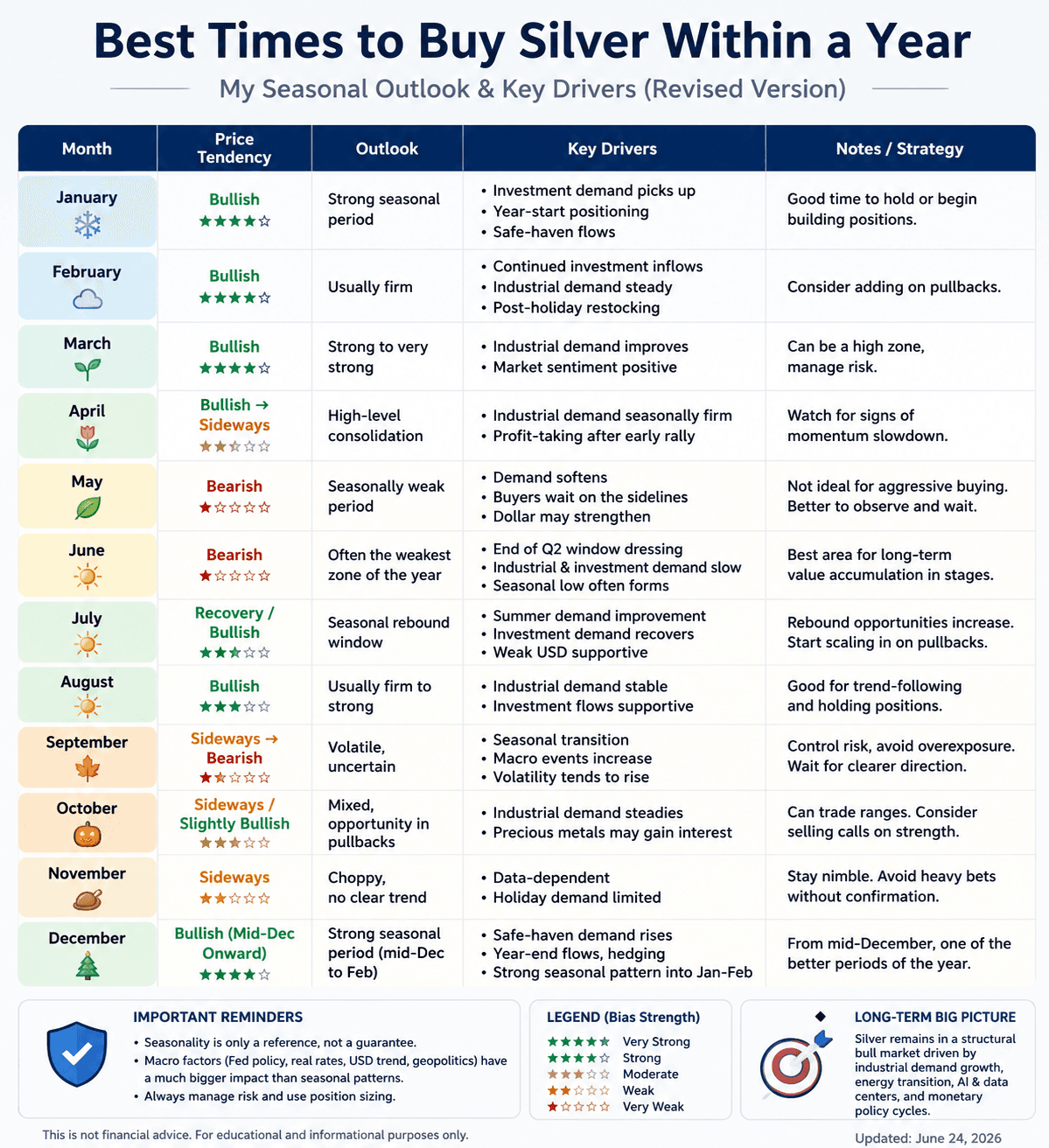
The Calendar Is a Lamp
A good seasonal chart gives light. Permission still comes from price, macro weather, and risk control.
It tells the trader where attention often gathers. It marks the months when investment demand tends to wake up, when industrial demand may soften, when summer repair often appears, and when year-end positioning can begin to matter.
The danger starts when a month becomes a command.
Silver moves when flows, rates, currency pressure, industrial demand, risk appetite, and positioning begin to lean in the same direction.
The Larger Weather
Silver sits in a narrow channel between several forces. It listens to gold, reacts to the dollar, feels real rates, and carries an industrial pulse under the surface.
For this reason, the heavier variables deserve the first reading.
- USD: a firm dollar can press on metals during a friendly month.
- Real rates: higher real yields can make silver harder to hold.
- Fed policy: rate expectations can change the tone of the whole precious-metals trade.
- Gold: silver often needs gold confirmation when the move is macro-driven.
- ETF flows and inventories: demand and supply stress can overwhelm a clean seasonal pattern.
When these variables line up with seasonality, the monthly map gains weight. When they diverge, the calendar becomes background music.
For Option Sellers
For option sellers, silver seasonality is mainly a volatility map.
Weak windows can bring thicker premium because the market is already pricing movement. Strong windows can carry sharper upside risk when gold, the dollar, and rates begin to agree. Transition months can look quiet on the surface while macro events gather underneath.
The useful read is simple:
- January to March: attention rises; crowding can rise with it.
- April: early strength often needs digestion.
- May and June: patience matters; weak price needs careful reading.
- July and August: repair can appear; confirmation still matters.
- September to November: macro sensitivity grows.
- December: the market may begin looking toward the January-February window.
The Quiet Rule
Seasonality works best as a second voice.
First comes the weather: dollar, real rates, Fed path, gold, flows, inventories. Then comes the month. A friendly month can make a strong setup cleaner. A difficult month can ask for more patience. Neither one can carry the whole decision.
Silver is smaller and more emotional than gold. It can move quickly, change mood abruptly, and punish tidy calendars.
Keep the map close.
Keep the hand slower.